



Major Modernisation of Australia’s Visa Processing System
From March 2026, the Australian Government began rolling out a new digital visa processing framework aimed at modernising how visa applications are assessed and managed.
This reform is part of a broader migration strategy focused on reducing long-standing backlogs, improving efficiency, and creating a more predictable experience for applicants.
A key objective of the system is to move away from heavily manual processes and towards a more technology-driven model, allowing applications to be processed more consistently while maintaining strict compliance standards.
Key Features of the New Visa Processing Framework
The updated system introduces several structural and technological improvements across visa processing.
One of the most significant changes is the increased use of automation and digital verification tools, enabling the Department of Home Affairs to assess certain information more efficiently.
The system also incorporates advanced case triage, where straightforward applications may be processed more quickly, while more complex cases are directed for further review.
In addition, applicants now have access to enhanced digital tracking tools, providing greater visibility over application progress and expected timelines.
The government has also introduced priority processing pathways in certain circumstances, allowing urgent applications to be assessed more quickly without compromising integrity checks.
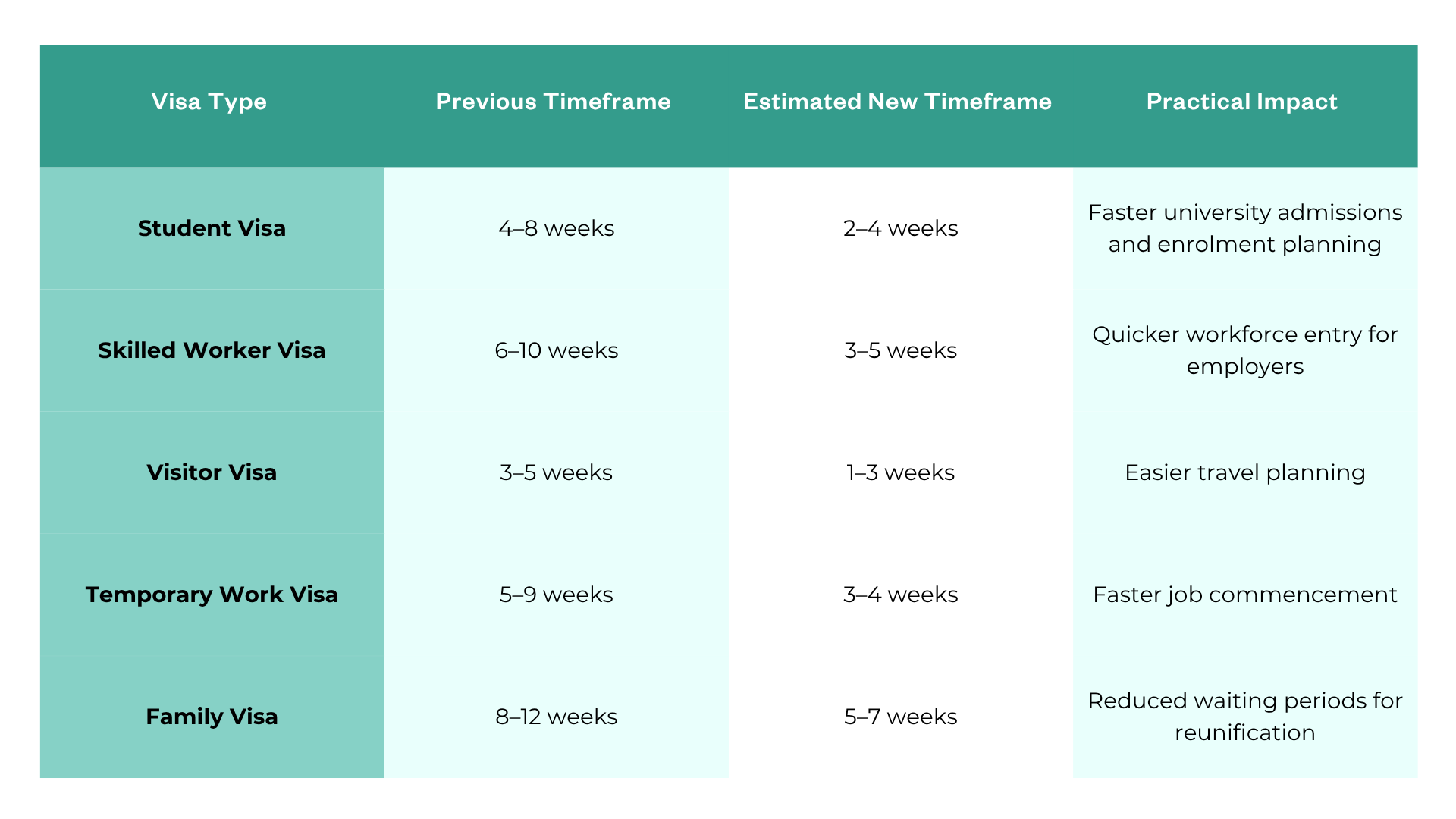
Faster Processing Times Across Key Visa Categories
As part of the reform, processing times across several major visa categories are expected to improve. While actual timeframes will still vary depending on application complexity and completeness, early indications suggest a noticeable reduction in processing periods.
Expected Benefits for Visa Applicants
The modernisation initiative aims to deliver practical improvements, including:
- Faster processing for lower-risk and well-prepared applications
- Reduced administrative bottlenecks
- Greater transparency throughout the application process
- More consistent and predictable decision-making
For many applicants, this means a smoother application journey with clearer expectations from submission through to outcome.
Implications for Migration Applicants and Employers
Despite these improvements, the visa application process still requires careful preparation.
With increased automation, errors, inconsistencies or missing information may be identified more quickly, which can lead to delays or refusals.
Applicants should ensure that all documents are accurate, complete and aligned with visa requirements before submission.
For employers, particularly those sponsoring overseas workers, it is critical to ensure that nomination applications and compliance obligations are properly addressed from the outset.
How NB Migration Law Can Help
While the system is becoming more efficient, Australian migration law remains complex.
NB Migration Law provides professional assistance with:
- Skilled migration visa applications
- Employer-sponsored visa programs
- Student and graduate visas
- Visa refusals and review options
- Strategic migration planning
Our team stays up to date with Australia’s latest immigration reforms to ensure clients receive accurate, practical and timely legal advice.